

Start with the site, not the soil
Begin by looking at sunlight, water flow and the existing ground. The same soil quantity or plant choice will not suit a clay hollow and a dry, exposed position. Once the starting conditions are clear, plants and materials are easier to plan.
Key idea: the bed area only gives a material quantity when it is considered together with the depth of the growing medium or mulch layer.
1. Choose the position and mark the bed
Consider light, wind, rainwater, paths and the mature size of the plants. Give the bed a clear edge against the lawn or a path. The edge can be level with the ground, made with stones or edging material, or built in another way that suits the site.
Remove turf and perennial weeds carefully. If roots, building debris or compacted ground are present, deal with them before spreading new growing medium.
2. Prepare the growing medium
The growing medium depends on the plants and the existing soil. Perennials, shrubs and trees can have different needs. Use plant and supplier guidance, and avoid a new layer that is so thick that it covers root collars or changes water flow.
Improve the structure only where it is needed. Clay soil, sandy soil and compacted ground call for different considerations. Mix or replace the growing medium as the plan requires instead of automatically adding the same soil everywhere.
3. Spread the soil and finish the surface
Measure the bed's length and width or determine its area from a drawing. Spread the growing medium evenly and shape the surface so water does not stand around plant roots. Leave enough room for the plants and allow for some settling.
Growing-medium quantity: area × layer depth = volume.
For example, 12 m² × 0.25 m = 3 m³ of growing medium. This is a way to turn your measurements into a volume, not a universal depth recommendation for every plant.
4. Add mulch with care
Mulch can reduce evaporation and keep the surface tidy, but it does not replace a suitable growing medium. Choose the material for its purpose: bark, wood-based mulch, gravel and other mulches behave differently and suit different plantings.
Mulch depth depends on the material and planting. Do not pile it directly against seedlings or woody plant stems, because excess moisture and lack of air can cause problems.
Common checks
- The growing medium is chosen for appearance alone rather than for the plants and site.
- Area or layer depth is not measured before ordering.
- The edge is unclear and the lawn quickly spreads into the bed.
- Mulch covers plant bases too deeply.
- Water flow is not checked before planting.
When the bed is ready, leave the plants the space their growth habit needs and be prepared to water during establishment according to the weather.
Plan your garden project with Maavio
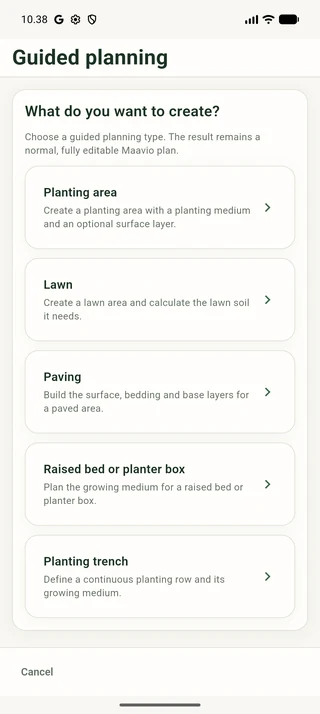
Maavio is a garden-planning app that keeps areas, material layers and quantity calculations together. Build a shopping list from your materials and follow the project’s progress in the same plan, from planning to implementation.
Available on Google Play

iOS version coming later in 2026.