

A quick yearly overview
Thuja hedge care is not a programme that can be locked to one calendar. Check winter damage and moisture in spring, watch for dry periods and shape lightly if needed in summer, make sure the root zone is moist enough before the ground freezes in autumn, and protect young plants as needed in winter.
- Spring: check brown patches, water flow and any need for feeding.
- Summer: water as needed during dry periods and prune only a hedge that is growing well.
- Autumn: keep the root zone moist and prepare young plants for winter.
- Winter: watch for drying sun, wind and heavy snow without unnecessary handling.
The first years and an established hedge
After planting, the root system is still small compared with the foliage that loses water through evaporation. Young plants therefore need more active follow-up than an established hedge, especially in warm, windy or dry weather. Plant size, root ball, soil type and planting time all affect watering needs.
An established thuja hedge usually tolerates short dry periods better, but it still needs watering. Long-term drought, sandy soil, competition from grass and weeds or a site changed by construction work can increase the need for care.
A good starting point: follow the plant and the moisture in the root zone, not just the calendar. If the planting is new or growth shows stress, avoid both stopping watering too early and pruning heavily.
Water deeply – let dry periods set the rhythm
Short surface watering moistens only a thin layer of soil. Water less often but thoroughly so that the water reaches the root zone, and let the surface dry out appropriately between waterings. No single litre amount can be given that suits every plant.
Check moisture just below the surface and take soil type, rain, wind, temperature and drainage into account. Sandy or quickly drying soil needs to be monitored differently from dense soil where water stands. If the soil is constantly wet, more water will not solve the problem.
During a dry autumn, water before the ground freezes so that the evergreen plant does not enter winter dehydrated. Stop watering when the ground is frozen or when conditions no longer allow water to penetrate.
The root zone and mulch
Keep the base and root zone of the thuja hedge as free from competition as possible. Weeds and grass use water while a young hedge is trying to establish its roots. Mulch can reduce evaporation, even out temperature changes and make the area easier to care for.
Choose mulch according to its use and the product instructions. Do not place it against stems or plant bases, and do not make the layer so thick that water and air have difficulty moving through it. Mulch does not replace a functioning growing bed or drainage.
Feed with restraint
A thuja does not automatically need fertiliser every year or whenever a brown patch appears. First assess the site, moisture, the plant's general condition and any possible nutrient deficiency. If feeding is justified, choose a product for conifers and follow the instructions on the package.
Do not feed a dry or otherwise stressed plant before the moisture at the site is under control. Heavy nitrogen feeding is generally avoided in late summer because new growth may not have time to prepare for winter. The product's composition and intended use determine when and how much fertiliser should be applied.
Prune lightly and keep the green surface
Maintenance pruning keeps the hedge's size and shape under control. Light, regular pruning is a safer starting point than a heavy cut made infrequently. The exact timing depends on the variety and site, but prune only when the plant is growing well and avoid a hot, dry period.
Most conifers do not regenerate well from old, brown wood. Do not prune deeply behind the green surface unless you know that the variety can produce new shoots there. Remove dry and damaged branches neatly, and check before pruning that there are no active bird nests in the hedge.
Autumn and winter: prevent drying
An evergreen thuja loses water even in winter, although the ground may be frozen. Winter sun and drying wind can put particular strain on young or autumn-planted plants. Good watering during the growing season is a more important starting point than heavy protection added only after frost arrives.
Young plants may need shade or wind protection depending on the site. The protection should allow air to circulate and must not rub against the plant. Also check that wet snow does not place excessive weight on the branches. An established, healthy hedge usually does not need the same protection as a new planting.
Why does thuja turn brown?
Brown patches are not always caused by too little water. Possible causes include drought, drying from winter sun and wind, frost, road salt, standing water, root problems, diseases, pests or pruning at the wrong time.
Check whether the damage is present throughout the hedge or only on individual plants, whether it is on a sunny or salt-exposed side, and whether the soil has been dry or wet. Correct a clear problem at the site, but do not add fertiliser or water without first identifying a likely cause.. If symptoms develop quickly, many branches die or the cause is unclear, ask a nursery or garden professional for an assessment.
Thuja hedge care in Maavio
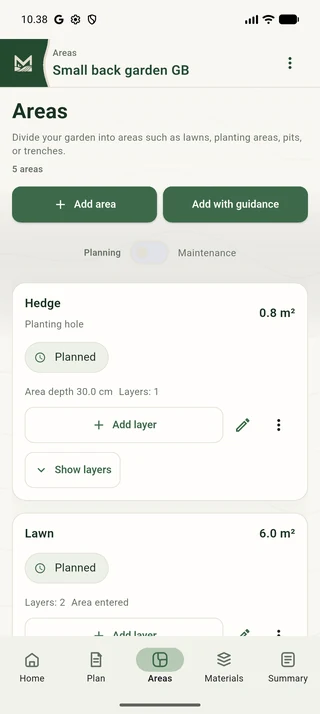
Once the thuja hedge is a finished area, you can keep its care in the same garden plan. Add watering, feeding checks, light pruning and autumn and winter preparations as tasks to follow. Reminders help you return to the area's tasks when the work actually becomes relevant.
Plan your garden project with Maavio
Maavio is a garden-planning app that keeps areas, material layers and quantity calculations together. Build a shopping list from your materials and follow the project's progress in the same plan, from planning to implementation.
Available on Google Play

iOS version coming later in 2026.